

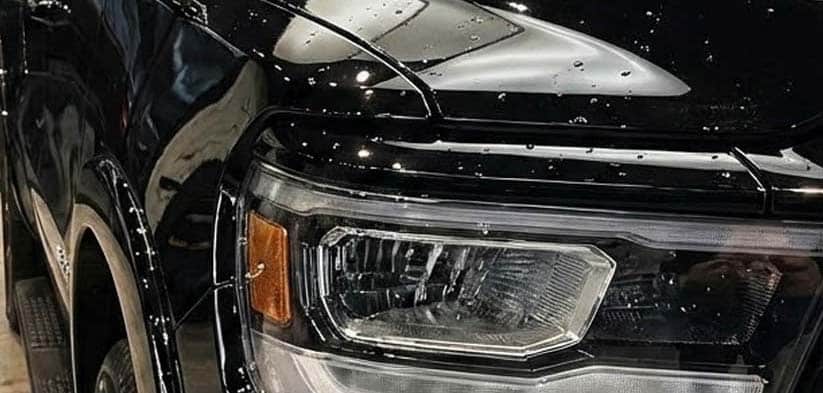
If you drive the 401, the QEW or Highway 410 regularly, your paint is under attack, and paint protection film takes those hits instead. Loose gravel, winter road salt and sand, and flying debris chip away at the front of your vehicle a little more every month. The damage is slow, but it never goes in the other direction. For many owners, paint protection film is the difference between paint that still looks new at trade-in time and paint that tells the story of every winter on the 401.
Paint protection film, usually called PPF, is a clear urethane film applied over your vehicle’s painted surfaces. It is nearly invisible once installed, and it takes the hits so your paint does not have to.
What paint protection film actually protects against
- Stone chips and road debris on the hood, bumper, fenders and mirrors
- Scratches from car washes, keys, and everyday contact
- Winter salt and sand abrasion, a real factor on GTA roads from November to April
- Bug splatter and bird droppings staining the clear coat
- UV fading on the panels it covers
Most modern films are also self-healing: light swirl marks and fine scratches disappear with a bit of heat from the sun or warm water. That self-healing quality is one reason paint protection film suits daily drivers as well as weekend cars: small marks from normal use fade instead of building up into visible wear.
Where it makes the most sense
You do not have to wrap the whole vehicle. Most of our customers start with the high-impact zones: the front bumper, the leading edge of the hood, the fenders and the side mirrors. That partial coverage handles the large majority of chip damage for a fraction of the cost of a full wrap. Full-vehicle coverage is there if you want complete peace of mind, and it pairs well with a colour change wrap if you are restyling the vehicle anyway.
How long does it last?
Quality film, installed properly, is a 5 to 10 year product depending on the film and how the vehicle is used. It can be removed later without damaging the factory paint underneath, which also helps resale value: the paint under the film is the paint the car left the showroom with. That lifespan is what good paint protection film should deliver with basic care. Washing it like normal paint, avoiding harsh solvents, and keeping the edges clean will help paint protection film reach the upper end of that range.
A note on installation
PPF is not a DIY product. The film has to be fitted, stretched and finished panel by panel, and the difference between a clean install and a poor one is visible up close: edges, corners and seams tell the story. All of our film work is done in-house at our Mississauga facility, in the same shop where we install vehicle wraps every week.
Before you book, ask what film is being installed, how the edges will be finished, and what warranty comes with it. A reputable installer should be happy to name the film, show you a finished vehicle, and explain how paint protection film is maintained afterwards. Those answers tell you more about the result than any brochure, and they make it easier to compare quotes fairly. If the film is fitted well, you should barely notice it — the paint, the colour and the shine should look exactly as they did before.
Thinking about it?
If your vehicle is new, recently detailed, or you are already seeing the first chips on the front end, that is the right time to look at film, before the damage adds up. See our paint protection film page for details, or request a free quote and we will price the coverage zones you actually need.