
How to Look After a Vehicle Wrap Through a Canadian Winter

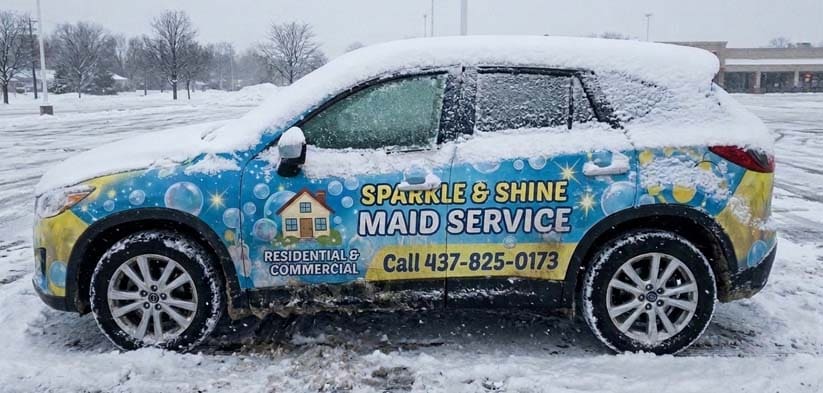
Wrapped van in snow, an example of vehicle wrap care in winter

A vehicle wrap is built to work outdoors all year, but a GTA winter is its hardest season. Road salt and brine, slush, grit, and weeks of freeze and thaw all work on the film and, more importantly, on its edges. The good news is that vehicle wrap care in winter is mostly habit, not hard work. A few small changes to how you wash and clear the vehicle will keep the wrap looking sharp until spring, and will keep your name readable if the vehicle is out there advertising your business.

1. Vehicle wrap care: Rinse the salt off, little and often

Good vehicle wrap care starts with not letting salt sit. Left on the film, salt and de-icing brine dull the finish, stain the surface, and creep into panel edges and seams, where they work on the adhesive underneath. Through winter, wash a wrapped vehicle every one to two weeks, and rinse it sooner after a big storm or a run on salted highways. Pay extra attention to the lower doors, rocker panels, wheel arches and rear doors or tailgate, where slush and spray build up fastest. A two minute rinse midweek is better than one big scrub at the end of the month.

2. Hand washing is the winter default

Hand washing is the safest way to clean any wrap, in any season. Rinse off the loose grit and salt first, then wash top to bottom with a soft microfibre mitt and a mild, pH-neutral car wash soap, and dry with a clean microfibre towel. Avoid brush car washes: the brushes carry grit from every vehicle ahead of you, and they can scratch the film, dull the finish and lift edges. Touchless washes are gentler, but their stronger chemicals are not made with wrap film in mind, so hand washing stays the recommendation. That is why hand washing is a core part of vehicle wrap care.

3. If you pressure wash, follow the film rules

Pressure washing is acceptable if it is done the way the film makers specify. Using 3M’s published guidance as the example: keep the pressure below 2,000 psi, keep the water temperature below 80 C, use a wide 40 degree fan nozzle, hold it at least 30 cm (one foot) from the panel, and aim straight at the surface, at 90 degrees. Never aim along an edge or seam, and never hold the jet at an angle to the panel: that is how water gets under the film and lifts it. Limits vary a little by film brand, so if you run a fleet wash bay, get the care sheet for the film on your vehicles rather than working from memory.

Following the film maker’s limits is basic vehicle wrap care, not an optional extra.

4. Keep the ice scraper on the glass only

This is the one that causes the most winter damage. Ice scrapers, stiff snow brushes and anything metal will scratch, gouge or tear wrap film. Scrapers belong on the windscreen and windows, nowhere else. Clear snow from wrapped panels with a soft foam snow broom and push it off gently. For ice on a wrapped panel, start the vehicle, run the heater and let it melt and release on its own. Do not pour hot water over frozen film: the sudden temperature change can shock and crack it. A little patience here saves a panel replacement in spring. That is a simple vehicle wrap care rule to remember in winter.

5. Vehicle wrap care: Watch the edges, and act early

Winter problems start at edges, not in the middle of panels. Every few weeks, run a clean fingertip along the edges around wheel arches, door seams, handles, mirrors and bumpers, and look for lifting, whitening, or grit trapped under a loose edge. A small lift is a quick, inexpensive fix at the shop. Left alone, water and salt wick underneath, and a small lift becomes a failed panel. Cold film is also less forgiving than warm film, so if an edge needs attention, it is better handled now than wrestled with in January. Checking edges regularly is simple vehicle wrap care that prevents bigger repairs.

6. Just had a wrap installed? Give it extra time

If your wrap went on this autumn, go easy on it at the start of winter. Film makers advise not washing the vehicle for the first week after installation, so the adhesive reaches full strength, and longer still in very cold weather. If your install lands in a cold snap, ask us before the first wash and we will tell you when it is safe. That patience is part of good vehicle wrap care for a new wrap.

7. Ask before waxes and coatings

Not every product made for paint belongs on vinyl. Waxes and polishes can change the look of matte and satin films, leaving shiny patches that cannot be undone, and some solvents and tar removers are too strong for printed graphics. If you want a protective product on the wrap for winter, ask first and use one made for your film and finish. The same goes for paint protection film on the front end: it pairs well with a wrap, but it has its own care rules. Asking first is good vehicle wrap care when a product is new to you.

The short version

Wash little and often, by hand, with mild soap. Keep pressure washers back and straight. Keep scrapers on glass. Fix small edge lifts early. Do those four things and a wrap comes out of a GTA winter looking the way it did going in. Those habits are the core of vehicle wrap care through winter.

If you are not sure whether a mark, stain or lifting edge is a cleaning job or a repair, bring the vehicle by our Mississauga shop and we will look at it with you. And if winter has you thinking about a wrap, a colour change or protection film for spring, see our vehicle wraps page or request a free quote.
Paint Protection Film: Invisible Armour for Your Vehicle

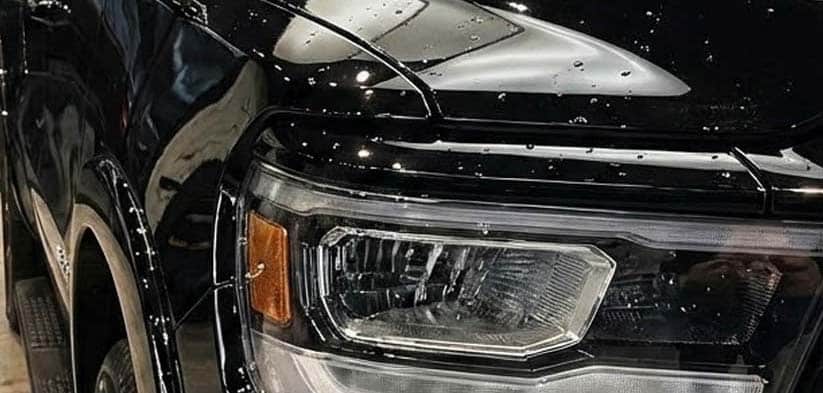
Front end of a vehicle protected with paint protection film

If you drive the 401, the QEW or Highway 410 regularly, your paint is under attack, and paint protection film takes those hits instead. Loose gravel, winter road salt and sand, and flying debris chip away at the front of your vehicle a little more every month. The damage is slow, but it never goes in the other direction.

Paint protection film, usually called PPF, is a clear urethane film applied over your vehicle’s painted surfaces. It is nearly invisible once installed, and it takes the hits so your paint does not have to.

What paint protection film actually protects against

  • Stone chips and road debris on the hood, bumper, fenders and mirrors
  • Scratches from car washes, keys, and everyday contact
  • Winter salt and sand abrasion, a real factor on GTA roads from November to April
  • Bug splatter and bird droppings staining the clear coat
  • UV fading on the panels it covers

Most modern films are also self-healing: light swirl marks and fine scratches disappear with a bit of heat from the sun or warm water.

Where it makes the most sense

You do not have to wrap the whole vehicle. Most of our customers start with the high-impact zones: the front bumper, the leading edge of the hood, the fenders and the side mirrors. That partial coverage handles the large majority of chip damage for a fraction of the cost of a full wrap. Full-vehicle coverage is there if you want complete peace of mind, and it pairs well with a colour change wrap if you are restyling the vehicle anyway.

How long does it last?

Quality film, installed properly, is a 5 to 10 year product depending on the film and how the vehicle is used. It can be removed later without damaging the factory paint underneath, which also helps resale value: the paint under the film is the paint the car left the showroom with. That lifespan is what good paint protection film should deliver with basic care.

A note on installation

PPF is not a DIY product. The film has to be fitted, stretched and finished panel by panel, and the difference between a clean install and a poor one is visible up close: edges, corners and seams tell the story. All of our film work is done in-house at our Mississauga facility, in the same shop where we install vehicle wraps every week.

Thinking about it?

If your vehicle is new, recently detailed, or you are already seeing the first chips on the front end, that is the right time to look at film, before the damage adds up. See our paint protection film page for details, or request a free quote and we will price the coverage zones you actually need.

Sign Design

Sign Design

Sign Design

Sign Design

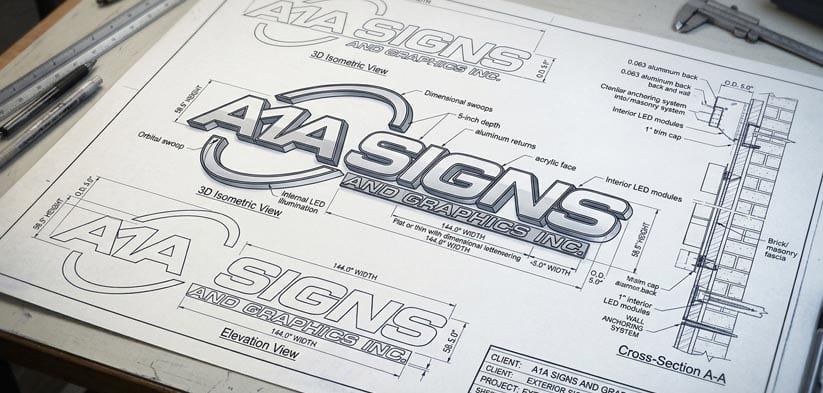
Sign design, if you’ve tried shopping online for a sign lately, you’ve probably been bombarded with an onslaught of companies that want you, the customer, to design your own sign. Many of them don’t even offer design services, or if they do, they charge extra for it. But are these design tools any good, and is it a good idea to try to design your own sign to begin with?

When it comes to the image of your business, much like with dental work, the design of your signage is best left to those with experience. More goes into the design of a sign than you might think. Especially now that full-color signs are becoming more common. Many sign layouts have complex issues to deal with.

Signs are usually the first thing your customers see, so it’s your first impression. Being able to read the sign from a distance should be a top priority. Many things have to be taken into account to ensure legibility. The font, the size of the lettering, the spacing, the kerning, the margins, the weight, the colors, and the order of the copy are just a few of the things that a professional sign designer stresses over to get your design just right. Online sign design tools are very primitive and don’t give you the rulers, guidelines, and advanced layout capabilities to optimize a sign for readability.

Aside from readability concerns, another priority should be designing a sign that fulfills its goal of doing what you intend for it to do. Whether that goal be to get customers in the door, generate leads, or instruct a passerby to do something, it takes an experienced sign designer to make sure the sign will be effective. If you don’t have experience designing signs yourself, you should let someone who does design your sign.

Aesthetics are often the top priority of sign buyers. While the top priorities should really be readability and effectiveness, aesthetics are also important. Signs should be appealing so that people actually want to read them and, in many cases, will go out of their way to see what the sign says. Online sign design tools usually offer a few tools to create some design elements, but they don’t automatically infuse the user with the knowledge and experience to use them to design a sign that looks professional.

There’s also the issue of templates. really, really bad templates. These online sign design apps are typically accompanied by some generic templates for you to customize with your information. But these templates are usually horrible, mass-generated layouts that won’t automatically accommodate your copy and certainly aren’t designed with your goals in mind.


The signs made with the online design apps end up looking unprofessional. What you see on your screen may look really awesome, but when you have the finished product in hand, the mistakes become apparent. It’s very obvious who built their own sign online and who let an expert design it.


Using the online sign design tools takes time. How much time are you willing to spend trying to use a frustrating online design tool to save a few bucks? It may not even cost that much more to have an experienced sign professional design your sign. Wouldn’t you be willing to spend an extra five or ten dollars to have a sign that is readable, effective, and looks professional?


The sad truth is that an increasing number of sign shops are implementing online design tools on their web sites. Sure, they engage the customer, but they are a huge disservice to both the customer and the sign company. If the signs are unreadable, ineffective, and unprofessional, they won’t work. And if they don’t work, the sign buyer is unlikely to ever buy signs from that sign company again. or at all.


Making the customer do most of the work in order to shave a few bucks off the price comes at the cost of customer loyalty, referrals, and repeat business. The online design apps are also bad for the sign companies.


The next time you need a sign, make a point to find a sign company that has experienced sign designers. You may have to pay a little more for the sign, but having a readable, effective, and professional sign is invaluable to your business. Many sign companies even offer a free sketch or free proof with their design before you even place an order.